Assam tea explained: origin, flavour and how to serve it
Where Assam tea comes from, what makes it taste malty and bold, and how cafés and bars can serve it.

Where Assam tea comes from, what makes it taste malty and bold, and how cafés and bars can serve it.
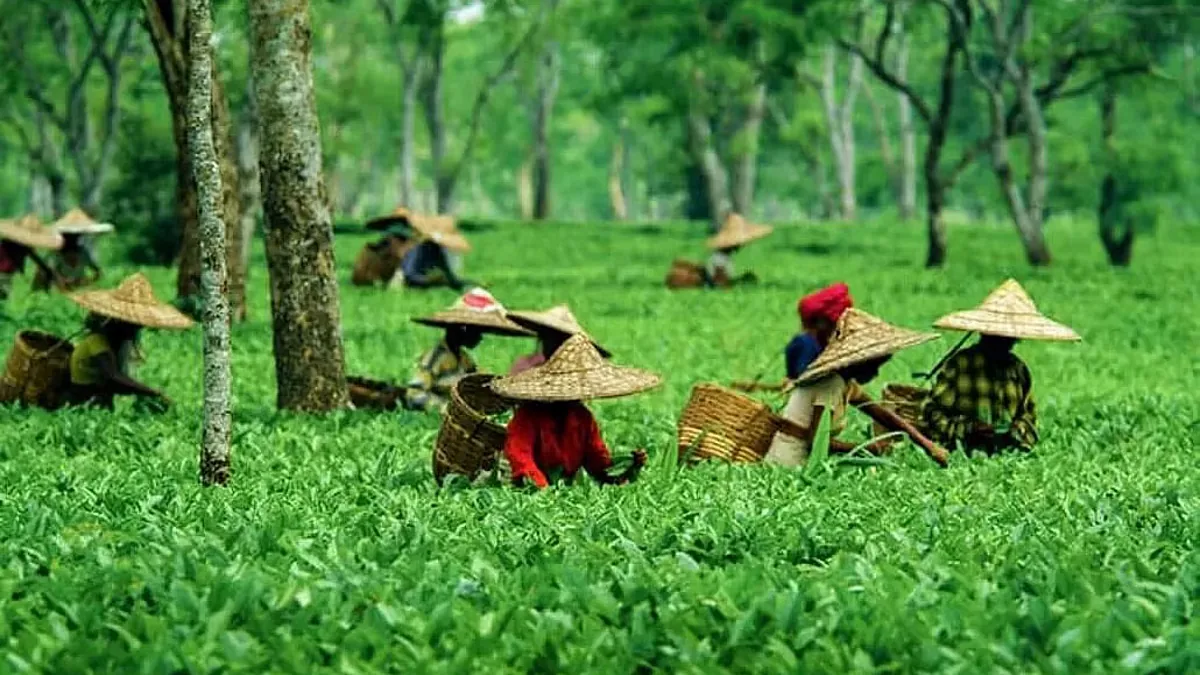
If you’ve ever had a strong cup of breakfast tea, there’s a good chance it started in Assam. This region in north-east India produces some of the most recognisable tea in the world, and it is where Woolah, one of the brands we import, sources its tea.
Assam lies along the Brahmaputra river, close to the borders with Bhutan and Bangladesh. Unlike the mountain slopes of Darjeeling, most Assam tea grows on low, flat land in a hot and humid climate with heavy monsoon rains. Those conditions help the tea plant grow fast and develop a full, strong character.
Assam has its own variety of the tea plant, Camellia sinensis var. assamica, with larger leaves than the Chinese variety. It grew wild in the region long before the first plantations. The story usually told is that in 1823 a Scotsman, Robert Bruce, was shown the wild tea plants by the local Singpho people, which led to the first tea gardens in Assam.
An Indian plant and a Scottish explorer: it’s a story we feel rather close to.
Classic Assam black tea is known for a malty, bold and brisk flavour, with a deep amber colour in the cup. It is strong enough to take milk, which is why it forms the backbone of many breakfast blends.
The harvest season matters too. The first flush, picked in spring, is lighter and fresher. The second flush, picked in early summer, is the one many tea lovers wait for: richer and maltier, often with golden tips visible in the leaves.
Assam also produces green and white teas. They are less common than the black teas, and much lighter, which makes them interesting for guests looking for something different.
Assam is familiar enough that guests know what to expect, yet a whole-leaf Assam from a named region is a clear step up from a standard breakfast tea. It works as a morning tea with pastries, as the base for chai-style drinks and, brewed strong and chilled, as an iced tea.