What is a bagless tea dip? A guide for cafés and bars
How bagless tea dips work, why whole leaves taste better, and how cafés and bars can serve them.

How bagless tea dips work, why whole leaves taste better, and how cafés and bars can serve them.
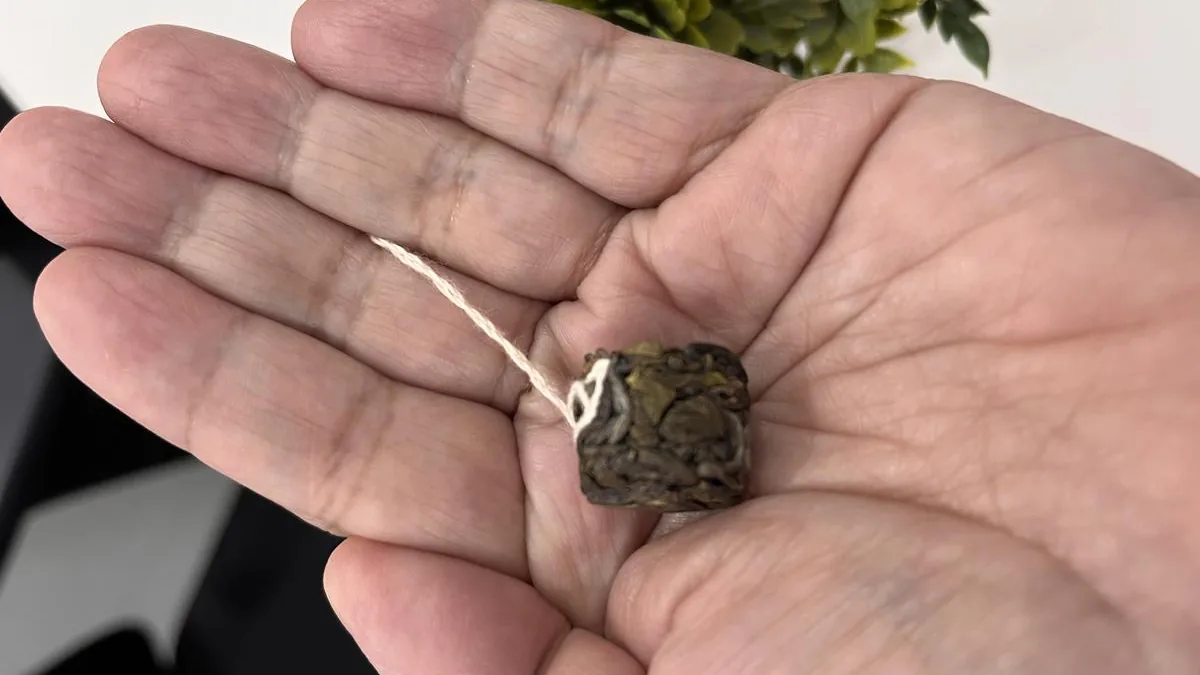
Most of the tea served in Europe still comes in a bag. It’s convenient, but it means broken leaves, a paper or plastic pouch in every cup, and very little to look at. A bagless tea dip keeps the convenience and drops the bag.
A tea dip is a small bundle of whole tea leaves, pressed together and tied with a natural thread. Woolah, the Assam brand we import, makes each dip from two leaves and a bud: the tender top of the tea plant that growers have traditionally picked for the best tea.
You use it exactly like a tea bag. Hold the thread, dip it into hot water and let it steep. The difference is what happens in the cup: as the water reaches the leaves, the bundle slowly opens and the whole leaves unfold.
Standard tea bags are usually filled with small, broken pieces of leaf. They brew fast, but they tend to release more bitterness and lose much of their aroma long before they reach the cup.
Whole leaves keep their structure. They brew more gently, give a rounder flavour and stay visible in the cup, which says more about quality than any label.
Many tea bags contain plastic, either in the mesh or as a sealant. A 2019 study from McGill University found that some plastic tea bags release billions of microplastic particles into a single cup. A tea dip has no bag at all: just leaves and a thread.
Use a clear glass or cup so guests can see the leaves. Pour hot water over the dip, or dip it into the water, and follow the brewing time on the box. As a rule of thumb, green teas prefer water just below boiling, while black teas can take water straight off the boil.
Woolah sources its leaves from small growers in Assam, in north-east India, one of the best-known tea regions in the world. The format is patented, and the brand caught attention in India when it received offers from all the investors on the fourth season of Shark Tank India.